Canny is the complete alternative to Thematic
Thematic is a customer intelligence platform for enterprise insights teams. Its analysis is built for studying feedback at massive scale.
Canny is customer intelligence for product teams. It captures and analyzes feedback too. It connects that to revenue and turns it into shipped features. It starts free and is live in hours.
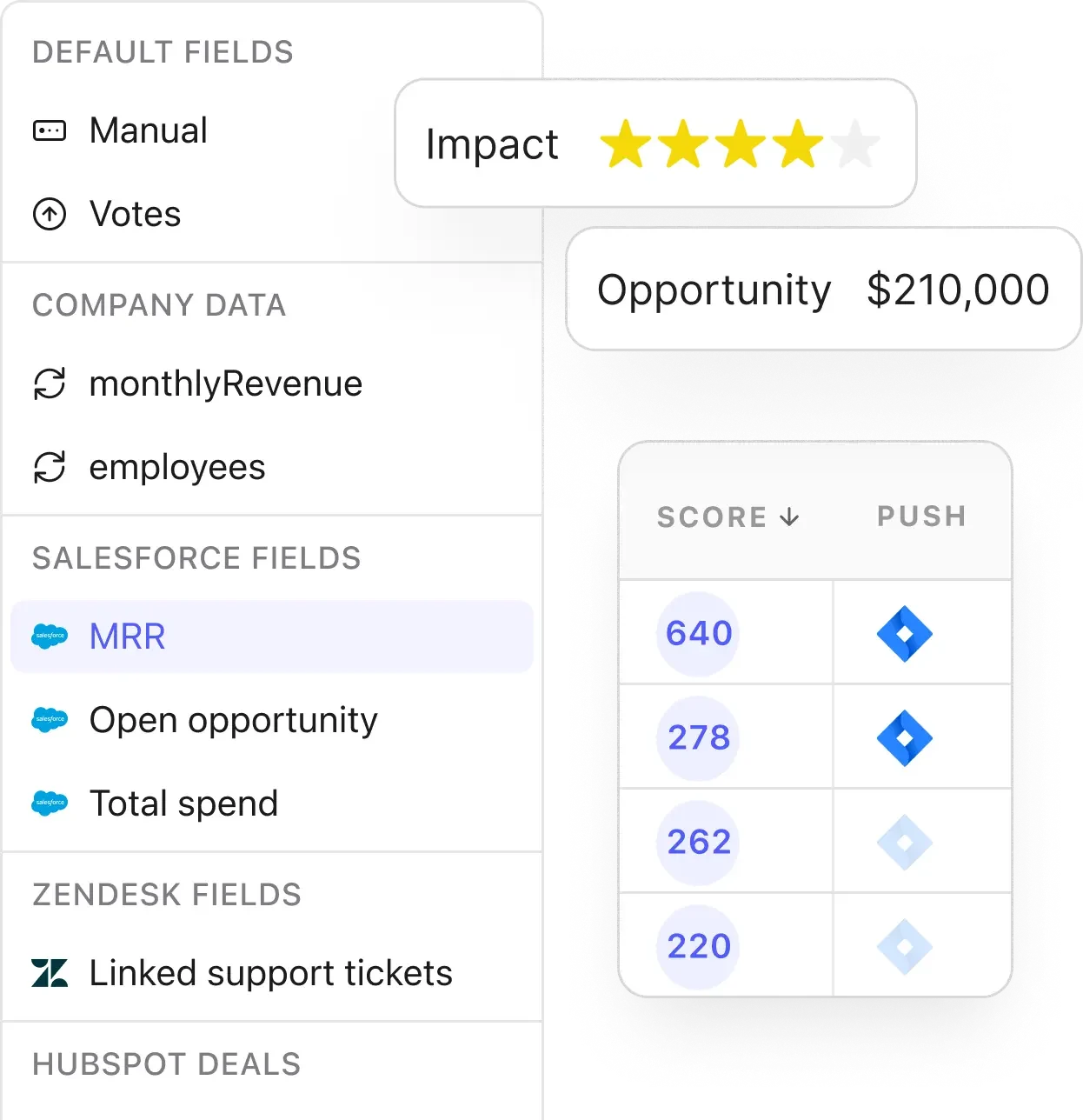
Table of contents
Quick look: Why people prefer Canny over Thematic

Capture and organize feedback with AI
Both Canny and Thematic use AI to pull feedback from your tools and organize it. No one is tagging it by hand. Canny Autopilot captures requests and problems from your team’s conversations in Gong, Intercom, Slack, and Zendesk. It deduplicates them and sorts them by the product areas and teams you define. It all lands in Ideas, the home in Canny for all your feedback. Thematic captures across its own connected sources too.
Canny also collects from a source Thematic has no equivalent for: your customers directly. Through Portal, they submit feedback and vote. It flows into Ideas next to everything Autopilot captures. The two tools overlap on automated capture. But only Canny also hears from the people who use your product. The bigger difference is what happens next.
Analysis built for decisions
Both tools use AI to organize feedback into themes. In each, you can trace a theme back to the conversations behind it, so nothing is a black box. The approaches differ. Thematic discovers themes from your feedback on its own and scores sentiment. It runs across millions of comments from dozens of channels, with the governance and reporting that scale requires. In Canny, you define the themes that matter to your product. Autopilot tags every new piece of feedback to them. A trends report shows how each one moves over time.
Canny has its own reporting, built around the decision rather than the analyst. Its dashboards roll up ARR at stake, open opportunity, dealbreakers, and renewal risk by account. From there you segment by customer and plan, and see what’s most requested. Weigh requests by customer demand and ARR, then act in the same tool. No analytics project to run.
If your job is studying feedback at enterprise scale, Thematic is built for that. If your job is deciding what to build and shipping it, that’s Canny.
Analyze deeper with ChatGPT, Claude, and Cursor
Canny’s analysis reaches into the AI tools you already use. Connect ChatGPT, Claude, and Cursor over MCP. Then you can interrogate your feedback as deeply as any question demands. Point your LLM at it and ask anything. Which requests are rising fastest in your enterprise tier? What did your churned accounts ask for and never get? How do two product areas compare across the quarter? Cross-reference it with whatever else your AI tools can reach.
And it goes both ways. Your LLM can read your feedback and write back to it. That means creating and updating requests, linking revenue, and managing views. The analysis doesn’t stop at a report. You ask the question and get an answer grounded in real feedback. Then you turn it into the next thing you build, without leaving your AI tools. Thematic has no MCP server, so this read-and-write access isn’t available there.
Connect feedback to revenue, and act on it
This is where Canny pulls ahead. Both tools connect feedback to business impact. But Thematic stops at CX metrics like NPS, churn, and effort. From there, the insight is handed off for action elsewhere.
Canny connects feedback to revenue and keeps the action in one place. Connect HubSpot and Salesforce, and every request carries its revenue context. You see the ARR at stake and the open pipeline riding on each request. You also see the revenue lost when customers churned over features you never shipped. See which features are tied to the most revenue. Sort the roadmap by what’s at stake. Build it, and tell the account owner the day it ships.
Keep customers in the loop
Thematic is internal. Its insight lives in dashboards for your team. Canny also closes the loop with the customers who gave the feedback. A public roadmap shows what you’re building. Changelog updates share your latest releases. So the people who asked hear about it automatically. Your team gets the internal side too. Account owners are notified when a requested feature ships. And you can export the list of everyone who asked, and follow up directly.
Start free, skip the enterprise contract
Thematic is built for enterprise insights teams. Its Foundation plan starts at $25,000 a year, with no free plan or trial. Getting value takes hands-on setup and tuning up front.
Canny starts free, and paid plans begin at $79 a month. Pricing scales with how many customers give you feedback, so it grows with you. It stays a fraction of an enterprise analytics contract. Most teams are live in hours, not weeks.
How CircleCI made Canny its one source of truth
CircleCI is the continuous integration platform used by leading engineering teams. Its feedback was scattered across several channels and a clunky legacy portal. The team consolidated it all into Canny. There, product managers triage requests, respond to customers, and prioritize what to build next. They chose Canny in part for its Jira and Salesforce integrations.
“It's a very valuable data source for us when we're evaluating and prioritizing what we're working on. Canny has been a really important part of getting an overall picture of feedback in one place.”
See Canny on your own feedback
Start free in minutes, or book a demo to see how Canny captures, prioritizes, and closes the loop on customer feedback.